TL;DR
- OSHA compliance is the floor, not the goal. Companies with the best safety records treat the standards as a baseline they're always trying to exceed.
- Safety culture is built by leadership behavior, workers watch what supervisors do on the site, not what the safety poster says.
- Three leading indicators of a strong safety culture: near-miss reporting rates (high is good), toolbox talk quality scores, and supervisor response time to hazard reports.
- Lagging indicators (TRIR, DART) tell you what already happened. Leading indicators predict what will happen, measure both.
Every company has an OSHA compliance program. The ones with the best safety records have something more: a culture where workers actually believe safety matters, and where leadership proves it every day.
Compliance Is the Floor
OSHA regulations are minimum standards. Meeting them keeps you out of trouble with inspectors. But the gap between "compliant" and "safe" is where most incidents happen.
A company that checks boxes but doesn't train workers to recognize hazards, or that pressures supervisors to keep the schedule even when conditions are unsafe, will have incidents regardless of what the paperwork says. The OSHA 300 log is a record of what the safety program failed to prevent. It is not the safety program itself.
What Leadership Actually Looks Like
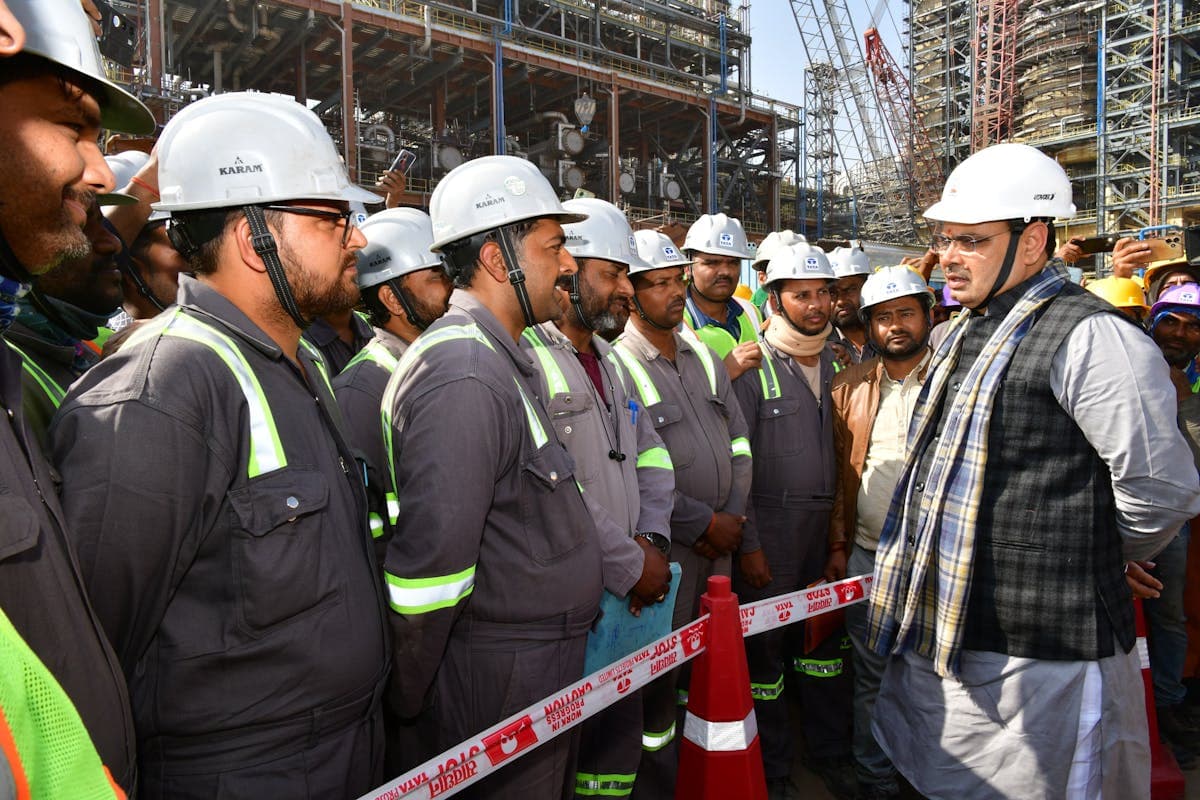
Safety culture starts at the top but is tested in the middle. The foreman who stops work when a worker doesn't have the right PPE, even when the schedule is tight, is doing more for your safety program than any written policy.
Leadership behaviors that build culture:
- Stopping work without being asked when a hazard is identified
- Asking workers about hazards before starting a task, and listening to the answers
- Treating near-misses as serious events, not lucky escapes
- Never normalizing a shortcut, even a small one
- Walking the site without a clipboard and talking to workers, not inspecting them
The inverse is equally true. When a superintendent walks past an unprotected edge without saying anything, every worker on the site receives the message that safety enforcement is selective. You can declare safety the top priority in every all-hands meeting and undo it in five seconds on the jobsite.
Near-Miss Reporting Is a Leading Indicator
Companies with strong safety cultures tend to have high near-miss reporting rates. That sounds counterintuitive, but it reflects something important: near-misses happen everywhere. The difference is whether workers report them.
A company with zero reported near-misses and a meaningful incident rate is not a safe company. It is a company where workers have learned that reporting problems creates problems for them.
Build a near-miss reporting system that is:
- Non-punitive: workers are recognized for reporting, not investigated as if they caused the problem
- Fast: reported near-misses receive a response within 24 hours
- Visible: corrective actions are communicated back to the workforce, so workers see that reports lead to changes
Near-miss frequency is one of the strongest predictors of where recordable incidents will occur next. Organizations that track it and respond to it consistently see TRIR improvement within 12 to 18 months.
Measure Leading Indicators, Not Just TRIR
TRIR is a lagging indicator. It records what already happened. By the time TRIR rises, people have already been hurt.
Leading indicators tell you where incidents are likely to occur before they do:
- Near-miss reporting frequency per 200,000 labor hours
- Inspection completion rate and corrective action close-out speed
- Training completion and documented competency verification
- Stop Work Authority usage (are workers actually stopping work for safety concerns?)
- Toolbox talk completion rates and attendance
A company tracking only TRIR is operating with a delayed signal. By the time the number moves, the causal conditions have been in place for months.
Stop Work Authority Has to Mean Something
Stop Work Authority (SWA) is the most powerful tool in a safety culture program and the most frequently undermined one. Every worker should have the right, and the responsibility, to stop work for a safety concern without fear of retaliation.
On paper, every company has SWA. In practice, workers who stop work often face subtle or direct pressure to get back on task. A supervisor who asks "are you sure?" twice before reluctantly halting work has effectively communicated that SWA is a formality.
SWA becomes real when:
- Leadership publicly backs workers who stop work, even when it costs schedule
- Stop Work events are tracked as positive data and shared with the team
- Workers who identify hazards are recognized, not managed
Training Has to Keep Up
OSHA standards change. New workers join. Equipment changes. A training program that was adequate two years ago may have gaps today. Regular refreshers, site-specific orientations, and documented competency checks are required, not optional.
Training must also be delivered in a way workers can actually use. If a significant portion of your workforce speaks Spanish, delivering safety training only in English and expecting equivalent comprehension is both a compliance gap and a liability. Bilingual safety training is a practical requirement on most Texas construction sites.
Building the Program When Resources Are Limited
Most small and mid-size contractors don't have a full-time safety director. The alternative to a full-time hire is not doing nothing. It is using a consultant to design the systems and programs that a part-time approach can maintain.
A well-designed safety management system, with clear documentation, trained supervisors, and a functional near-miss reporting process, can be operated by a crew leader who doesn't carry a "safety" title. The system does the work. Someone has to build the system.
Greenberg Safety provides safety program development and construction safety management for companies throughout Texas and nationwide.