
TL;DR
- PPE is the last line of defense, not the first, it supplements engineering and administrative controls, not replaces them.
- Minimum hard hat spec: ANSI/ISEA Z89.1 Type II, Class E for electrical work. Safety glasses: ANSI Z87.1+.
- Hi-Viz: Class 2 minimum for roadway-adjacent work; Class 3 for higher exposure environments.
- Replace any PPE immediately after an impact event, internal damage is not visible and the protection rating is gone.
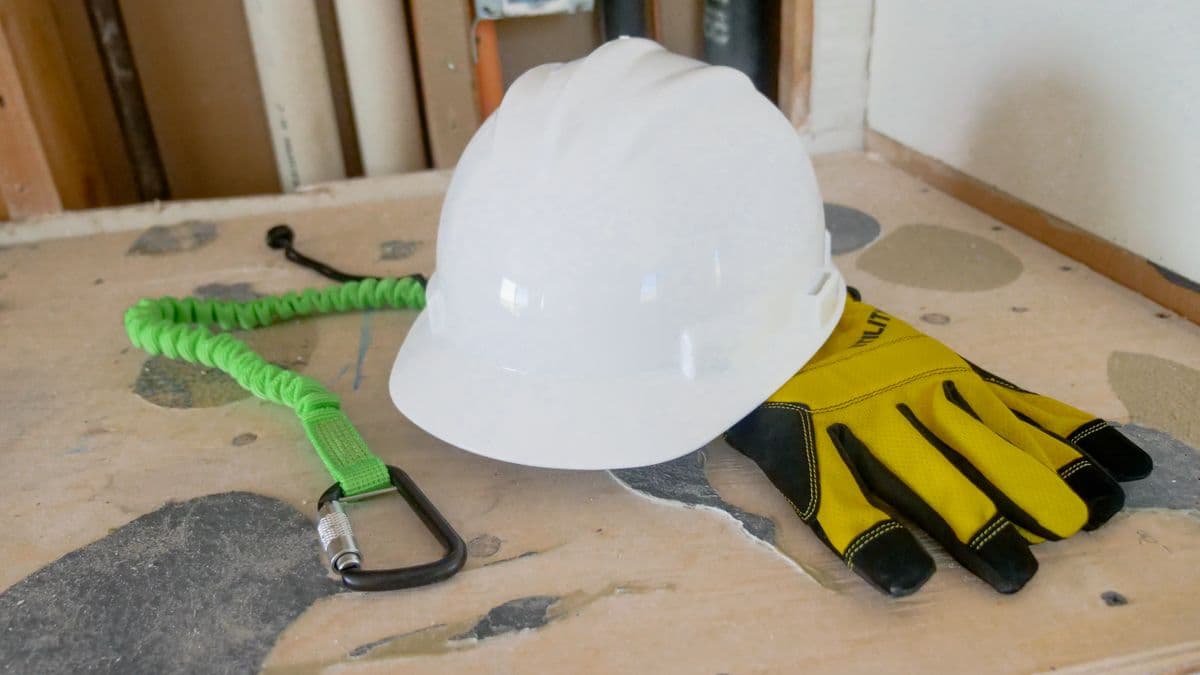
Construction worker safety gear, also called PPE (personal protective equipment), is any clothing or equipment worn to protect workers from job site hazards. The seven standard categories required on most construction sites under OSHA 29 CFR 1926 Subpart E are: head protection, eye and face protection, hearing protection, hand protection, foot and leg protection, respiratory protection, and high-visibility clothing. Employers are legally required to provide appropriate PPE whenever engineering and administrative controls cannot fully eliminate a hazard.
Affiliate disclosure: Greenberg Safety participates in the Amazon Associates program. If you purchase through links in this article we may earn a small commission at no extra cost to you.
Quick picks:
| PPE | What to look for | Buy |
|---|---|---|
| Hard hat | Type II, Class E, vented | Shop → |
| Safety glasses | ANSI Z87.1, anti-fog, side shields | Shop → |
| Earmuffs | NRR 25+, easy on/off | Shop → |
| Cut-resistant gloves | ANSI A4 or higher | Shop → |
| Work boots | ASTM F2413, steel toe, EH rated | Shop → |
| N95 respirator | For dust and grinding | Shop → |
| P100 respirator | 3M 6500 series for silica and lead | Shop → |
| Hi-vis vest | ANSI Class 2 minimum | Shop → |
PPE only works when it's the right gear, worn correctly, every time. Here's what matters for each category, and the common mistakes that leave workers exposed even when they think they're protected.
Head Protection: More Than Just a Hard Hat
Head injuries account for a significant share of construction fatalities. OSHA requires hard hats wherever there's a risk of falling objects, bumping into fixed objects, or accidental contact with electrical hazards.
Class E (Electrical): Rated up to 20,000 volts, the standard choice for most job sites near electrical work. This is what you want on virtually every construction site.
Class G (General): Rated up to 2,200 volts, suitable for general construction without significant electrical exposure.
Class C (Conductive): No electrical protection, only where there is absolutely no electrical risk.
Replace a hard hat immediately after any significant impact, even if there's no visible damage. The shell may be compromised in ways you can't see.
Eye and Face Protection
Flying debris, dust, sparks, and chemical splashes make eye injuries one of the most preventable, and most common, construction hazards. Safety glasses alone aren't always enough.
Safety glasses: ANSI Z87.1-rated for impact resistance. Required for most general tasks. Shop ANSI Z87.1 safety glasses →
Goggles: Sealed fit for grinding, cutting, or working with chemicals and fluids. Shop safety goggles →
Face shields: Used over safety glasses or goggles for high-splash or high-impact tasks like chipping concrete or welding. Never a substitute for glasses, they work together.
Hearing Protection
Construction sites are loud. Prolonged exposure to noise above 85 decibels causes permanent hearing loss, and most heavy equipment easily exceeds that threshold. Unlike a cut or broken bone, hearing damage is cumulative and irreversible.
Disposable foam earplugs: Noise Reduction Rating (NRR) of 29-33 dB. Effective and inexpensive for daily use. Shop foam earplugs →
Reusable earplugs: Good for workers who need to communicate, some models allow speech frequencies through while blocking harmful noise.
Earmuffs: Better for intermittent noise exposure; easier to put on and remove quickly. Shop earmuffs →
Hand Protection
Hands are involved in nearly every construction task, making them highly vulnerable. The key is matching the glove to the hazard.
Cut-resistant gloves (ANSI A4-A6): For rebar, sheet metal, glass, and sharp materials. A4 covers most construction tasks. Shop cut-resistant gloves →
Impact gloves: For demolition, heavy equipment operation, and tasks with crush risk. Shop impact gloves →
Chemical-resistant gloves: Nitrile or neoprene for solvents, adhesives, and concrete, which causes chemical burns on prolonged contact. Shop chemical-resistant gloves →
Vibration-dampening gloves: For jackhammers and power tools, reduces long-term hand-arm vibration syndrome risk.
Foot and Leg Protection
Steel-toed or composite-toed boots rated to ASTM F2413 are the baseline on any active construction site.
Puncture-resistant midsoles: Essential on sites with exposed nails, rebar, or debris.
Slip-resistant outsoles: Critical on wet concrete, steel decking, and muddy ground.
Electrical hazard (EH) rated boots: Required near live electrical work, a secondary layer of protection against ground faults.
Metatarsal guards: For steel erection and precast concrete, areas with heavy dropped-object risk. Shop metatarsal guard boots →
Respiratory Protection
Silica dust, wood dust, lead paint, asbestos, and chemical fumes are invisible killers. Respiratory damage is often permanent by the time symptoms appear.
N95 disposable respirators: For nuisance dust and non-oil-based particulates. The minimum for concrete cutting or grinding. Shop N95 respirators →
P100 half-face respirators: For silica, lead, and other highly hazardous particulates. The 3M 6500 series is the field standard. Shop P100 half-face respirators →
Full-face air-purifying respirators: For chemical vapors, paints, and enclosed spaces with multiple hazards.
Supplied-air respirators (SCBA): For confined spaces with oxygen-deficient or IDLH atmospheres.
Respirators must be fit-tested annually. A beard breaks the seal on a tight-fitting facepiece, it's not a style issue, it's a safety one.
High-Visibility Clothing
On sites with moving equipment, being seen is survival. ANSI/ISEA 107 sets three classes based on risk level:
Class 1: Low-traffic environments with equipment speeds under 25 mph.
Class 2: The standard for most active construction sites, vests with retroreflective striping. Shop Class 2 hi-vis vests →
Class 3: Full garments for workers in roadway or high-speed equipment zones. Shop Class 3 hi-vis →
A Word on Fit
PPE only works when it's worn correctly and consistently. Gear that's uncomfortable gets taken off. Invest in quality equipment that fits well, an ill-fitting hard hat or loose safety glasses provide a false sense of security.
The Bottom Line
No PPE program succeeds without buy-in at every level. Supervisors who skip their hard hat on a "quick walkthrough" send a louder message than any safety briefing. The job site culture around PPE starts at the top. Inspect gear before every use, replace damaged equipment immediately, and remember: PPE is the last barrier, engineering controls and safe work practices should always come first.
Schedule a consultation or call (512) 585-7070 to make sure your team has the right gear, and is actually using it.
Related reading: Fall Protection Basics toolbox talk · Construction Worker Safety Gear Checklist · OSHA PPE standards, 29 CFR 1926 Subpart E