
TL;DR
- Most construction safety plans cover the build phase but treat commissioning as an afterthought, that's when incident risk spikes sharply.
- Cx Levels 0–5 define the progression from component testing to full system integration; each level has a distinct set of live hazards.
- Construction crews and operations staff must operate under a single, unified permit-to-work system during commissioning, dual authority creates gaps.
- Highest-risk hazards during Cx: arc flash from energized switchgear, chemical refrigerants, UPS battery banks, and confined spaces in mechanical rooms.
Most safety programs for data center construction are written for the construction phase. They address fall protection, excavation, scaffolding, electrical safety: the standard OSHA 29 CFR 1926 framework.
They typically address commissioning as an afterthought, if at all.
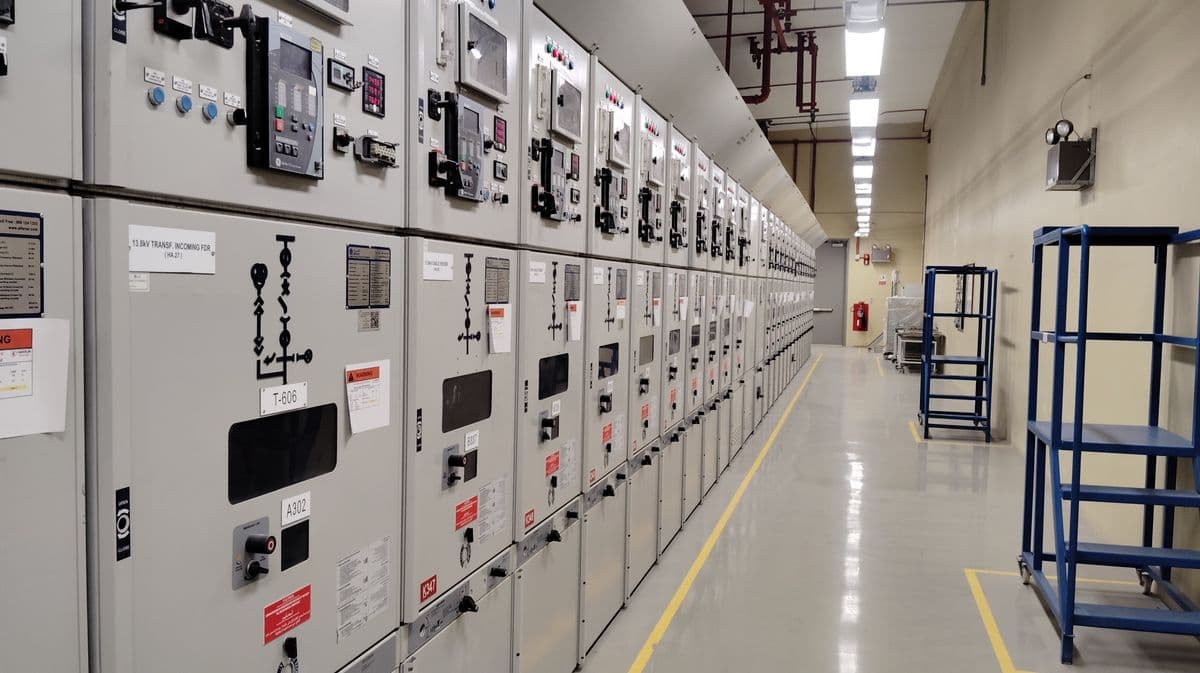
That's a problem, because commissioning is the phase when data center construction is most hazardous. It's when energized equipment, construction activity, and live IT operations coexist in the same building. It's when the rules that govern who can do what, where, and under whose authority become genuinely complex, and when a gap in authority or communication causes a serious incident.
What Commissioning Actually Is
Commissioning (abbreviated Cx) is the systematic process of verifying that data center systems perform as designed before and after they go live. It covers electrical systems, mechanical/HVAC, generators, UPS, fire suppression, security, and IT infrastructure.
The specific levels or phases of commissioning vary by owner and framework. ASHRAE and BICSI both publish guidance on commissioning processes. At a practical level, the phases that matter most for safety are:
Static testing (C1/Level 1): Equipment inspected with no power applied. Low hazard. Standard construction safety protocols apply.
Component testing (C2/Level 2): Individual components energized and tested in isolation. This is the first phase where live electrical equipment is present on a construction site. Arc flash protocols and access controls become active requirements.
Integrated systems testing (C3/Level 3): Multiple systems energized and tested together. Power distribution, UPS, generators, and mechanical systems operating simultaneously. This is typically the highest-hazard phase of commissioning for construction safety purposes.
Performance testing (C4/Level 4): Full facility load testing under simulated operational conditions. IT load banks installed, full power draw, generators cycling. Construction activity is usually still ongoing in adjacent spaces.
IT cutover and live operations (C5/Level 5 or equivalent): Live customer IT equipment installed and running. Construction work continues in unoccupied sections.
Why Safety Programs Fail During Commissioning
The core problem is authority. During construction, the GC controls the site. During commissioning, the owner's commissioning agent and operations team start asserting control over energized systems. During live operations, the owner's operations team has authority over anything that touches their equipment.
These boundaries are often not clearly defined in the safety plan. The result is:
- Workers crossing into energized areas that they don't know are energized
- Construction crews performing work under OSHA LOTO procedures while operations staff assumes a different lockout authority
- Contractors performing "quick" tasks near live equipment without required arc flash PPE because they don't perceive the work as electrical
- Inadequate notification when commissioning phases advance and energization status changes
The incidents that happen during commissioning are almost never caused by ignorance of the hazard. They're caused by failure to apply what everyone knew to a situation they didn't recognize as hazardous.
What Your EHS Program Must Address
Construction/Operations Interface Protocol. This document must exist before the first energization event. It defines who controls access to each zone, how zones change as commissioning advances, the notification requirements before and after any energization, and the approval chain for any construction activity in or adjacent to a live zone.
Energized Electrical Work Permits. For any task that cannot be performed under LOTO, including testing and diagnostic work: an energized electrical work permit (consistent with NFPA 70E) must be issued and approved before work begins. This applies to both construction workers and commissioning agents.
Arc Flash PPE Compliance. The required PPE for any task near energized equipment is determined by an arc flash hazard analysis, not by worker judgment. The minimum is Category 1 FR clothing (4 cal/cm²) for any unqualified worker who may approach energized equipment. For work within the arc flash boundary, the required PPE escalates based on incident energy calculations.
Daily Zone Status Communication. Energization status changes during commissioning. A zone that was safe for unrestricted access yesterday may be live today. A morning briefing that communicates current zone status to all active crews is not optional: it is the primary mechanism that prevents uninformed workers from entering live areas.
Barrier Integrity Audits. Physical barriers between live and construction zones must be maintained and audited daily. The audit must confirm that barriers are intact, that no uncontrolled penetrations exist, and that signage accurately reflects current zone status. As commissioning advances and live zones expand, the barrier management burden increases.
Qualified Electrical Worker Program. Not every worker can enter every zone. A documented qualified electrical worker program defines who has demonstrated the knowledge and training to work on or near energized equipment, at what voltage levels, and under what conditions. Workers who have not met those qualifications must not be allowed to enter restricted zones without escort and PPE appropriate for the hazard.
The Role of the Safety Professional During Commissioning
The safety professional assigned to a data center project during commissioning needs to do three things well.
First, understand the commissioning schedule and stay one step ahead of it. If energization of the mechanical room is scheduled for Tuesday, the safety professional needs to have the interface protocol updated, barriers inspected, PPE verified, and crews briefed before Tuesday. Reactive safety management during commissioning does not work.
Second, be the communication bridge between the construction team and the commissioning team. Both sides have legitimate authority and legitimate safety requirements. The safety professional translates between those frameworks and identifies where they conflict before those conflicts produce incidents.
Third, document everything. An energized work permit that wasn't logged doesn't exist. A zone walk that wasn't recorded didn't happen. During commissioning on a high-value project, documentation is both the legal record and the operational tool that prevents repeated errors.
The Handoff to Operations
When the last construction phase closes out and operations takes full control, the safety handoff matters. Operations staff take over a facility whose hazards were managed by a construction safety program they may never have seen. Commissioning documentation, zone maps, energized work permit logs, and incident records should be formally transferred to the operations team.
Most projects treat this as a punch-list exercise. It is a safety-critical transition that deserves the same rigor as the commissioning itself.
Greenberg Safety provides EHS consulting and project safety staffing for data center construction and commissioning phases across Texas. If your project is approaching commissioning and your safety program isn't ready, contact us.